
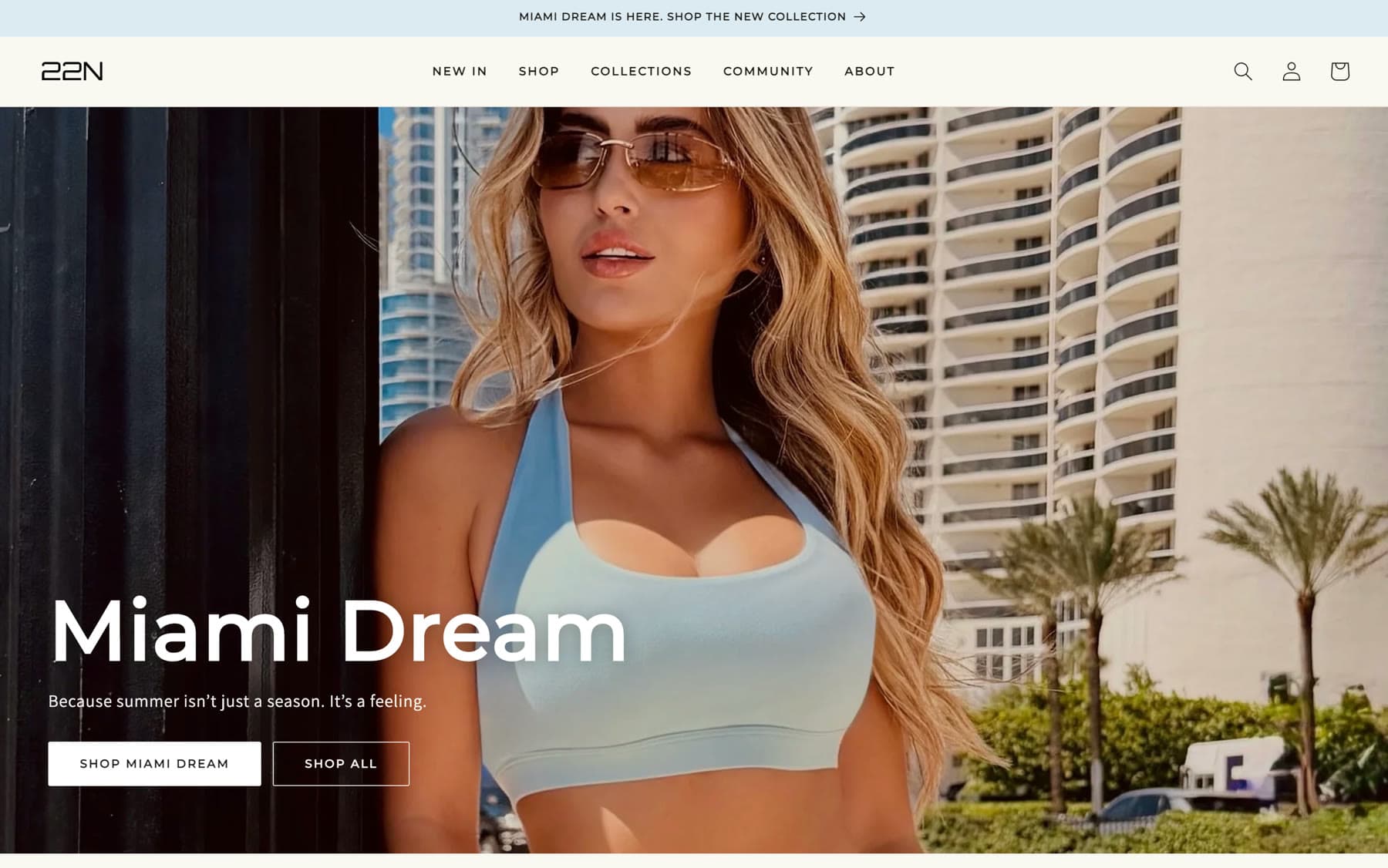
Apparel · Shopify
22 natiON
Rebuild
Ground-up
Shopify
Custom build
Mobile-first
Storefront
A ground-up Shopify rebuild for a premium activewear brand.
Service · Meta Ads
JDT Inc. is a Meta Ads agency in Miami. We run Facebook and Instagram campaigns with real customer research, a steady creative testing cadence, and measurement that survived iOS. Everything is judged against the metric that pays your bills.
Outcomes
Targets, not promises — the metrics every engagement is measured against. Real numbers from real clients live in the case studies below.
−25–40%
Target cost per lead reduction
2–4×
Return on ad spend we aim for
30+
Creative variants tested per quarter
Weekly
Cohort reporting cadence
Who it's for
Meta works hardest for brands with a clear story, a defined buyer, and a willingness to test. The clients who get the most out of our program tend to share the same shape:
Ideal clients
Industries
Stages
Methodology
Every Meta engagement runs the same four-stage loop. We compress the work that traditional agencies stretch into months, and we keep the loop running for as long as we work together.
We map the buyer using your first-party data: purchase history, customer-call transcripts, support tickets, reviews. From that we build a short list of audiences, each with concrete creative angles.
Senior creative direction produces a matrix of variants, each tied to an angle and a hook. Static, motion, and UGC are produced in parallel, not in series, so testing volume is high from day one.
Audiences and creatives are tested under controlled conditions, not thrown at the wall. Winning combinations graduate, losers are retired, and the matrix evolves every two weeks.
Spend scales against verified contribution, not platform-reported attribution alone. We report on cohorts, payback windows, and the leading indicators that predict the next quarter rather than the last one.
What's included
What's built and handed over inside a typical Meta engagement.
Campaign structure, audience hierarchy, exclusion logic, and naming conventions designed for clean reads at scale. No legacy chaos.
Editorial direction, art direction, and ongoing creative output: static, motion, UGC. Built to run, not to deliver one-time files.
Conversion API, server-side events, UTM hygiene, and a post-iOS attribution layer that survives the next privacy update.
A live document that maps the next 30, 60, and 90 days of audience, creative, and offer tests, so the testing never stalls.
Weekly performance reads tied to revenue, payback, and contribution. Not impressions and CPMs.
Where AI changes the math
AI in Meta Ads is overpromised in pitch decks and underused in practice. Here is exactly where we apply it, and where we deliberately don't.
We run support transcripts, sales calls, and review data through a language-model pipeline that clusters them into audiences and angles. Work a manual analyst team would take weeks to do by hand.
Hooks, headlines, and copy are generated under brand-voice constraints, then human-edited. Nothing is auto-published. The result is a 10× larger testing pool, with every variant reviewed by a creative lead before it sees a dollar.
Daily performance is monitored by a model that flags meaningful deviations, like sudden CPM spikes, audience fatigue, or attribution gaps, before a human would catch them in the dashboard.
Selected work
Apparel · Shopify
22 natiON
Rebuild
Ground-up
Shopify
Custom build
Mobile-first
Storefront
A ground-up Shopify rebuild for a premium activewear brand.

Local Services
Carpet Cleaning Xperts
+28%
Revenue in 60 days
Bilingual
Creative across EN / ES
Local
Service-area targeted
Cutting cost per lead by a third while growing revenue across new territories.
Frequently asked
Related services
01
Search, Performance Max, and Shopping campaigns built for qualified leads, not impressions.
02
Turn more of your traffic into customers. Landing pages, conversion testing, and tracking across the whole funnel.
03
Campaign concepts, art direction, and content systems that make the brand look its best and outperform in feed.
Engage
Most engagements start with a 30-minute call. We'll walk through your goals, your numbers, and what the first 90 days should look like.