
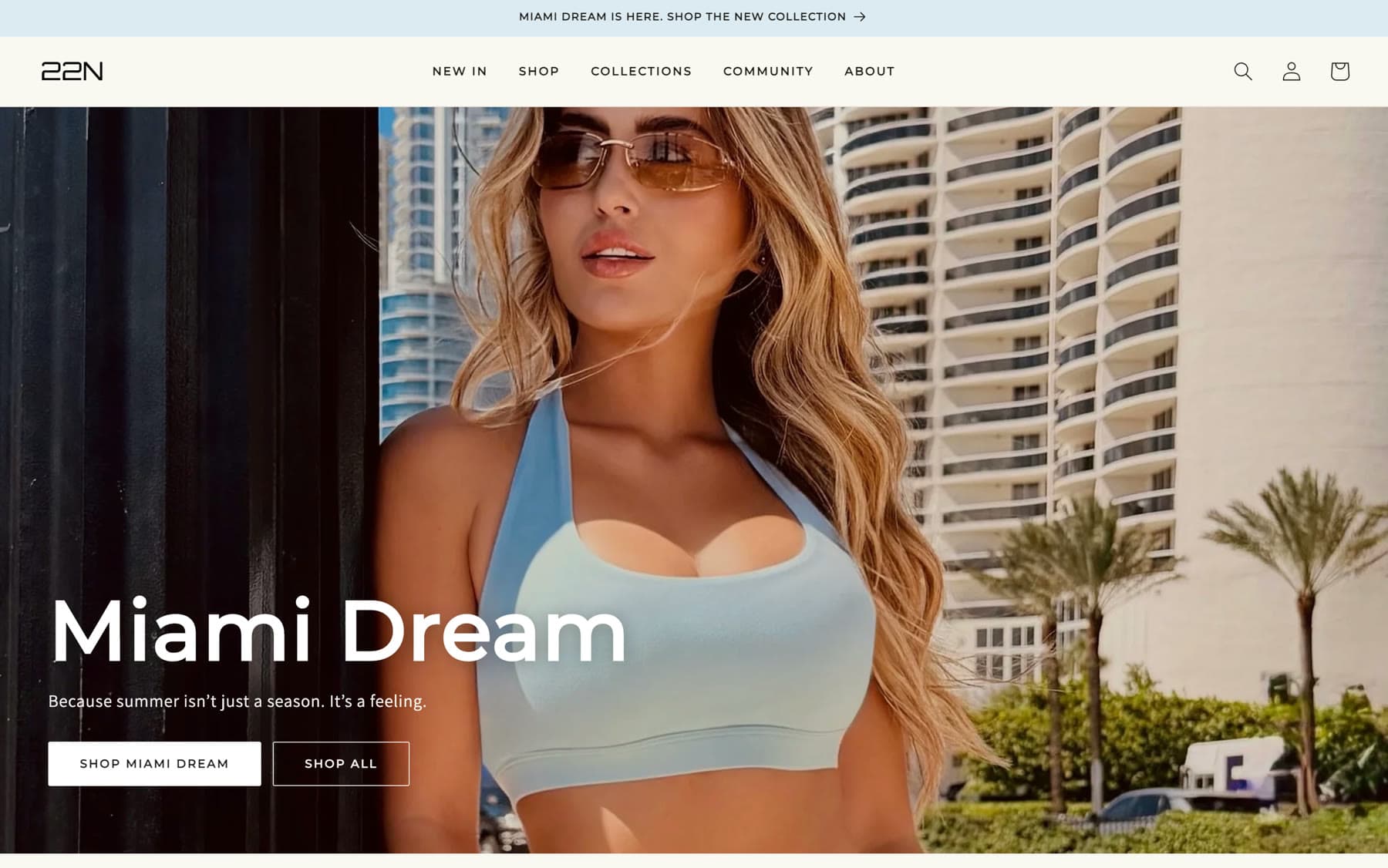
Apparel · Shopify
22 natiON
Rebuild
Ground-up
Shopify
Custom build
Mobile-first
Storefront
A ground-up Shopify rebuild for a premium activewear brand.
Service · AI Automation
Most agencies sell AI as a buzzword. We build and run the actual systems: lead enrichment, customer research, content workflows, and reports that write themselves. People stay in the loop wherever judgment matters.
Outcomes
Targets, not promises — the metrics every engagement is measured against. Real numbers from real clients live in the case studies below.
10×+
Speed on audience research
−60%
Manual reporting time
24/7
Lead enrichment cadence
Weeks
Time to production system
Who it's for
AI automation pays back fastest where there's repeatable knowledge work and clean data. The clients who get the most leverage tend to share these traits:
Ideal clients
Industries
Stages
Methodology
Every AI automation engagement runs through the same four stages. We don't ship demos. We ship working systems with documentation, monitoring, and a runbook.
We sit with the people doing the work, document the steps, identify what's repeatable, and map where AI adds leverage versus where it adds risk. Not everything should be automated.
Each workflow is designed step by step: inputs, transformations, validation, human-review gates, output. We pick tools (Clay, n8n, Zapier, Make, custom code, the OpenAI / Anthropic APIs) based on the job, not the trend.
Systems are built with monitoring, error handling, and clear ownership. People review where judgment matters: copy approval, lead qualification, anomaly response. Quality holds at scale because someone owns it.
We document the runbook, train your team, and stay on retainer for the first quarter to tune. The system is yours when we're done, not a black box that breaks the moment we leave.
What's included
What gets built inside a typical AI automation engagement.
Inbound and outbound leads enriched with firmographic, intent, and persona data, then scored against your ideal customer profile using a model trained on your closed-won history.
Brand-voice generation pipelines for ad copy, email, social, and short-form video scripts. A creative lead reviews every output before it ships.
Weekly performance digests compiled automatically from Meta, Google, GA4, and your CRM, written in your team's voice instead of template English.
Customer-call transcripts, support tickets, and review data clustered into audiences that inform creative, copy, and product positioning.
Documentation of every workflow, owner, monitoring alert, and escalation path, so your team can run the system without us.
Where AI changes the math
Most agencies say they 'use AI.' Here's what that actually looks like in production for our clients.
Production systems use structured prompts with explicit schemas, validation, and retry logic, not a teammate copying outputs out of ChatGPT. The difference is reliability and an audit trail.
Every system has a defined gate where a person reviews. Copy ships through editors. Leads route through a qualifier. Reports are signed off before they leave the building. Speed without judgment is just faster mistakes.
We build on Clay, n8n, Make, Zapier, custom code, and the major model APIs depending on the workload. Nothing is locked into a single vendor, so when models or pricing change, the work doesn't break.
Selected work
Frequently asked
Related services
01
Qualified, sales-ready inbound. Paid acquisition, landing pages, scoring, and CRM handoff designed as one machine.
02
CRM implementation, automation, segmentation, and email programs that turn one-time buyers into repeat revenue.
03
Short-form, long-form, talent, and post, run on an editorial calendar and built to drive both brand and pipeline.
Engage
Most engagements start with a 30-minute call. We'll walk through your goals, your numbers, and what the first 90 days should look like.